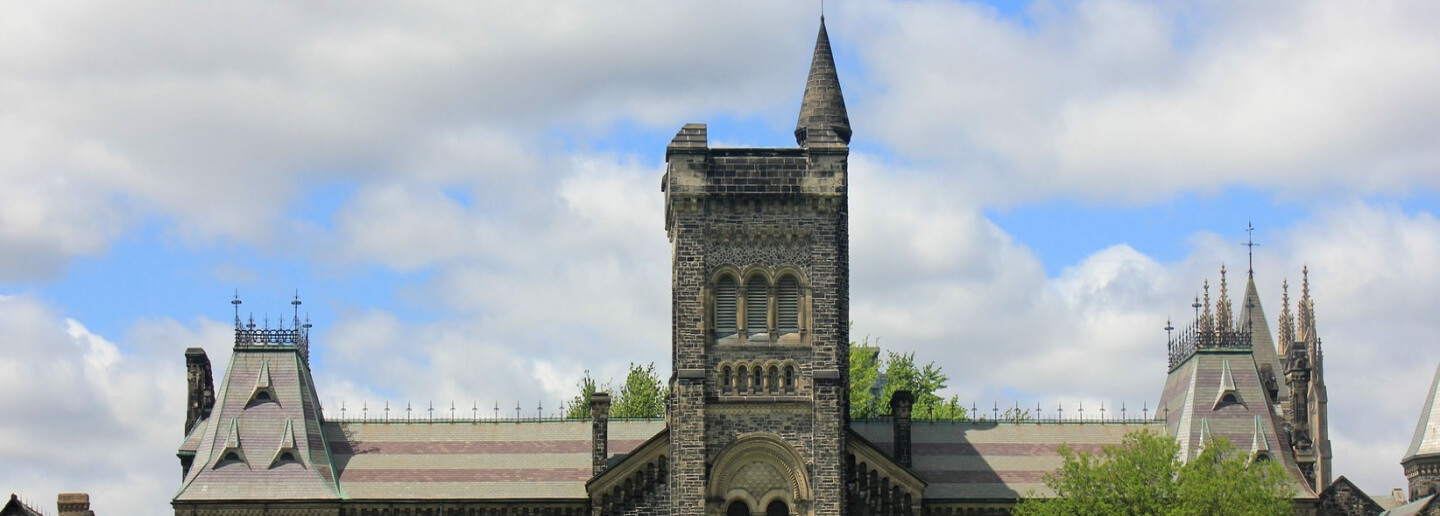

This is the second part of David Engels’ ‘A New Cluny’, a slightly revised English translation of his “Auswege aus der Bildungsmisere: ein neues Cluny?,” published in H. Schulze-Eisentraut / A. Ulfig (eds.), Das Ende der Universität. Niedergang und mögliche Erneuerung einer europäischen Institution, Baden-Baden 2024, 168-179. Please find Part 1 here.
Thus we approach the explanation of the title of this contribution; a ‘new Cluny’ – a formulation I have already used in a couple of papers for some years without really elaborating on it until now. The meaning is, of course, immediately understandable: just as the Cluniac reform breathed new life into the Benedictine order through a return to austerity, discipline and uncompromising inwardness, and was partly responsible for the unprecedented new upsurge in the monastic movement of the High Middle Ages, so too is the academic world in need of such a reform. But how should one imagine such a thing in concrete terms? And above all, isn’t it a little too easy, indeed downright irresponsible, to preach something ‘new’ instead of first reforming the ‘old’?

Source: https://upload.wikimedia.org/wikipedia/commons/thumb/7/77/Cluny_Farinier_depuis_clocher.jpg/330px-Cluny_Farinier_depuis_clocher.jpg
For the sake of simplicity, let us start with the second question, since it is in fact the simplest to answer. For to reject the idea of a renewal of academia as ‘utopian’ and rather to present the patient and self-sacrificing mucking out of the Augean stables as the only serious solution is a form of thought that we encounter again and again when it comes to the fundamental question ‘What is to be done?’ – and which misses the real problem. For of course there is no question that we must make an effort to continue to hold and, if possible, expand the few positions of true diversity of thought in the everyday academic system. But we must also realise that without control over the political and legal system that sets the educational policy guidelines and checks that they are adhered to, without a complete reorganisation of the mass media, which represent a much more efficient system of social engineering than any modern institutional education will ever be, and finally without access to that diffuse third-party funding system in which semi-political foundations, obscure NGOS and politically correct ‘big players’ exercise de facto control over the academic entity, only rearguard actions are possible.
The often publicised idea of a second ‘march through the institutions’ is thus unrealistic. First, because such an internal renewal would take at least one, if not two generations – but Europe’s rapid decline will be much more rapid. Second, there is no denying the impression that the institutions now dominated by wokes tend to have less tolerance and understanding for conservative competitors than was the case since the 1960s when the situation was reversed. In other words, while conservative institutions have, in the past, grudgingly agreed to admit left or green positions to the education system in order to give voice to the whole range of social diversity, it seems that, now, the real sense of contemporary ‘diversity’ lies essentially in branding all conservative positions as allegedly ‘far-right’ and fighting them vigorously, instead of entering into a genuine dialogue with those who think differently. For many woke ideologues, politics is not the search for a constant balance, but only the fight for the implementation of their own positions, which, once legalised, can no longer be put up for discussion. Freedom of opinion is only demanded as long as one’s own position is not yet legally binding; but as soon as this is the case, the entire machinery of state, media and society is employed to curtail the freedom of all those who wish to criticise or even reverse the transformations that have just taken place.
Hence, the modern university will never be able to recover on its own; it needs the impetus from outside. So: How should we imagine a modern educational ‘Cluniac’ reform? To answer this question, I would like to start from the three actual problems of the modern university: First, the mass university has made any elite formation impossible; second, the actual formation of character is no longer carried out by the university, but by the social media; and third, educational policies increasingly correspond to the opposite of what would really make sense. From this follows the need for educational institutions that are radically tailored to elites, that focus not only on specialised knowledge but on genuine character development, and that follow a curriculum that is entirely their own and independent. What does this mean in practice?
First, in order to save what is left of our academic tradition, we would have to found new educational institutes all over Europe, designed not for the masses but for a small number of students; first and foremost in the field of the humanities, which, although seemingly less important for the concrete economy, are central to the shaping of the ‘Zeitgeist’: Nor did the increasing leftist control of Western society emanate from the doctors, mechanical engineers or physicists, but from those who went into politics, the media, the schools and the arts. In contrast to the mass university, those new institutes should be about the highest standards and performance and create a small but powerful and highly qualified elite. This requires a very high density of supervision with, at the same time, very small groups of students. This also implies a departure from the increasingly schoolish education system rules, a return to very mixed student groups and a diploma philosophy that is about collegial analysis of character and personality development, not about the mechanical addition of credit points. Especially in the humanities, the digitisation of literature makes such a foundation of new educational institutions working with small student groups exceedingly easy, since a single memory stick can replace an entire library: The goal of the new educational philosophy should therefore be the closest cooperation and the highest challenges, quality instead of quantity, with a simultaneous renewed connection between the formal teaching of the basics of our civilisation and their actual importance for today’s life – individually as collectively.
Second: Alongside, perhaps even ahead of, subject-specific education, character building should be in the foreground: learning, researching and private life must no longer be understood as separate spheres, but as an inseparable unit, because knowledge without education and the ability to ‘lead a good life’ is more harmful than ignorance. This is about nothing less than awakening the young generation to an intellectual resilience that will make them real critical spirits who allow themselves to be influenced neither by the pressure of the masses nor by the temptations of cheap pleasures, but go their way straight and incorruptibly. Central to this is close cooperation with the university teachers, who should be seen less as mere service providers and more as mentors and partners. From this point of view, it would also make perfect sense to organise such a close cooperation after the example of the monastic communities in order to complement individual progress by a communal exemplary way of life; a life where moments of joint and individual research are always to be combined with moments of reflection, physical effort, work for the community, introspection and even artistic education.
Third: At first glance, the question of the curriculum may seem the most difficult, since two problems arise here. First, it is inevitable that the envisaged educational institutes will most likely not be licensed by the state; they will therefore have to be conceptualised less as a way of ‘infiltrating’ modern academia and more as the nucleus of a future informal economic and intellectual system increasingly freed from state dictates. Hence, the main aim should not be the formation of highly specialised future university professors, but rather a broad new elite capable of facing the challenges of modernity by delving deep into the legacy of Western civilisation. The second problem is of a substantive nature: the front against wokeism is one thing; the definition of an alternative is quite another: Is it libertarianism? Catholicism? Nationalism? Anarchism? The personal preferences of the author of these lines are well known; nevertheless, a ‘new Cluny’ must be generous enough not to lapse into sectarianism, but rather represent the entire spectrum of free counterculture so far as it is compatible with the genuine values of the West. Therefore, two concepts seem central. On the one hand, ‘universitas’: genuine education always presupposes an overview of the entirety of the humanistic disciplines, the old ‘artes liberales’, in order to be able to truly serve mankind and truth, and so specialisation should always go hand in hand with the simultaneous continuation of general educational activities. On the other hand, and closely related to this, ‘tradition’: the entire system of education should be guided on the one hand by respect for the millennia-old Western virtues and on the other hand by an understanding of the self-destructive consequences of its decline.
Highest quality, character building, cultivation of tradition – these should be, in short, the three pillars of such a Cluniac re-foundation of education through numerous small institutions all over Europe; institutions which, on the one hand, should each be independently adapted to their regional, national or ideological framework, but at the same time must also be interrelated to the extent that exchange, support and common growth must be assured from the very beginning. This will undoubtedly require a common charter, which must be the result of wise reflection and negotiation; nevertheless, it is certainly not out of place to provide at least a sketch of such a text here, if only as a basis for discussion:
| As scholars, we are convinced by the following theses: – There is a single, indivisible and absolute Truth. This Truth underlies all things of spirit and matter, but is only recognisable to man in approximation and therefore always requires critical debate – a task never fully completed. – Truth and Oneness is at the same time also identical to Beauty and Goodness: morality, aesthetics, logic and philosophy spring from a single force and are mutually dependent. Understanding them is the noblest mission of man. – As a spiritual being, man participates in the true, the good and the beautiful, but through his physical existence, he is also bound to nature and its laws, which are depend on the one Truth. Natural Science means studying nature and its laws, but at the same time also accepting, respecting and caring for them. – The striving for Truth in all its facets has always been the basis of human research. As much as man has made quantitative progress in his mastery of nature, the pursuit of Truth must remain an inner approach. The totality of these attempts represents the treasure of a tradition that can never be considered as outdated, but must be cultivated and revived again and again. – Research must not be an end in itself, but must be in harmony with the striving for a Good Life. Genuine education should therefore serve not only the approach to Truth but also the development of personality and the ideal of constant inner and outer self-surpassing, and must also include social responsibility for the present, the future and the heritage of the past. – Knowledge requires exchange and mediation between times and between people. Places of teaching must therefore be places of equal conversation and cultivate order and an exemplary living alongside mere knowledge. |
Dr David Engels, Lux Mundi Advisory Board